Features
Performance reviews that work out of the box
Workspark gives you a complete, structured review process: self-assessments, peer feedback, upward reviews, and manager evaluations, with opinionated defaults that work immediately. Launch your first review cycle in under 10 minutes.
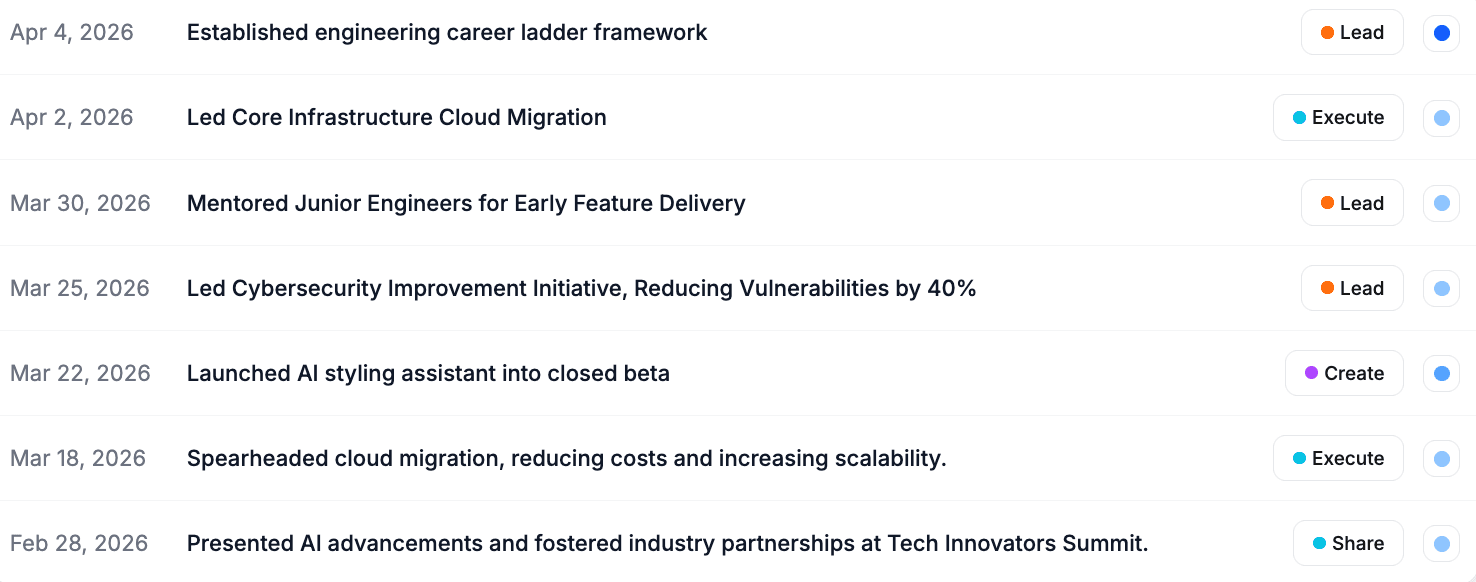
Built on a foundation of accomplishments
Accomplishments are captured continuously and surfaced directly inside the review editor, so self-assessments and manager reviews are written against the same record of work from across the period.
Reviewees get a natural place to showcase the work they want recognised, and managers see the full arc of the cycle rather than only the most recent weeks — so feedback reflects the whole review period, not recency.
Recognise strengths and areas of growth
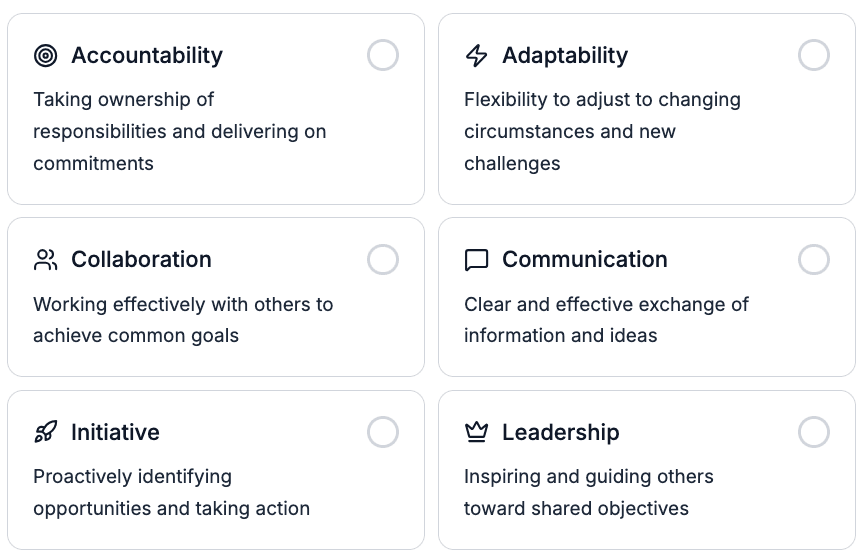
Every review names specific strengths to recognise and specific areas of growth to focus on. Each observation is tagged against a library of 11 core competencies like accountability, collaboration, or problem solving.
Recognition gives people credit for what they are already doing well. Growth areas give them something concrete to work on next. Over multiple cycles, the same framework builds a through-line that makes development conversations easier.
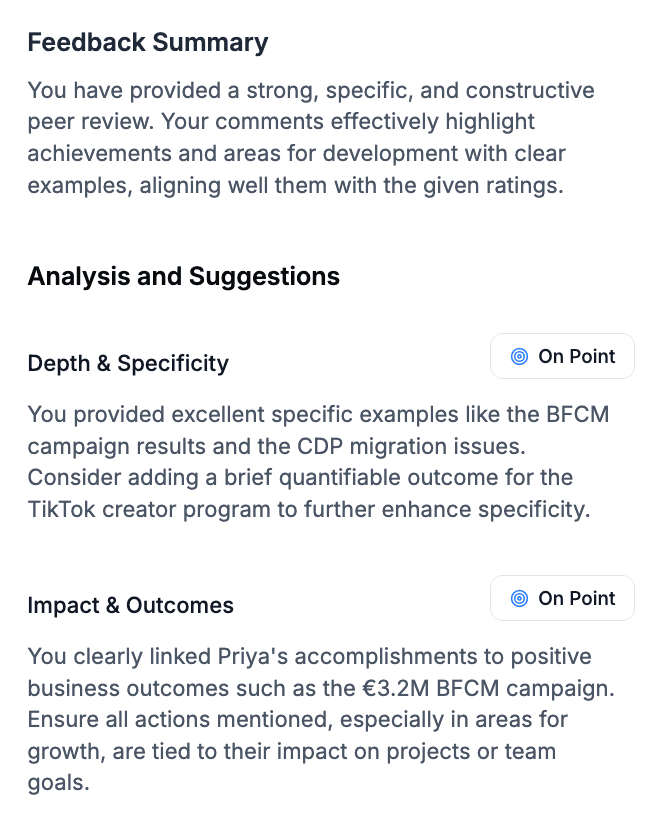
AI-assisted review feedback
An AI assistant reads each review as it is written and offers targeted suggestions for improvement: where to add evidence, where to sharpen a claim, where a rating might not match the written feedback. Reviewers get real-time coaching on how to write a stronger review, and reviewees get feedback that is specific, well evidenced, and genuinely useful.
For manager reviews, the assistant also checks alignment with the self-assessment, peer feedback, and upward feedback, so nothing important gets missed.
Actionable insights
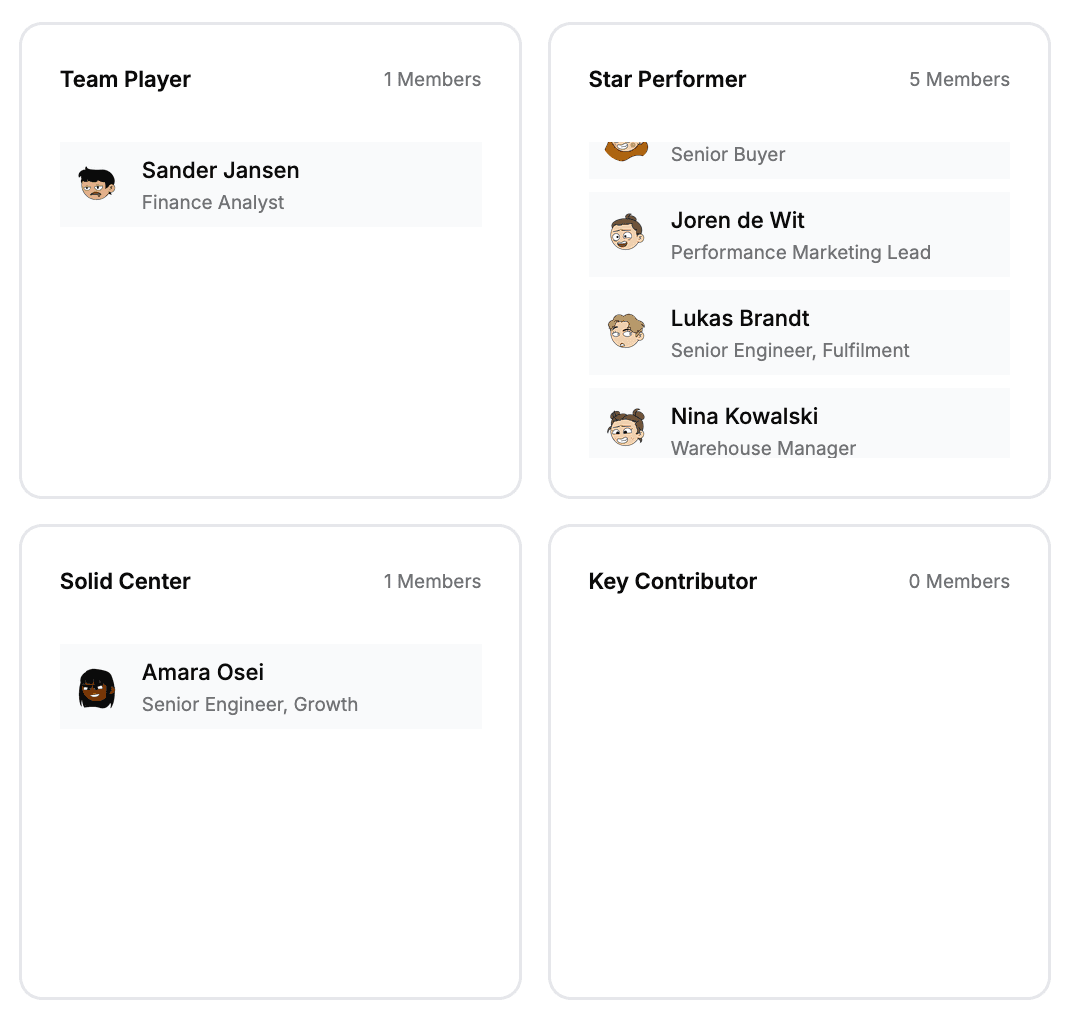
Every cycle rolls up into a full results view: rating distributions, reviewee summaries, and a classic nine-box grid mapping delivery against behaviour. Filter by manager, team, or rating band to drill into specific segments.
This is the evidence base for everything that happens after reviews close: calibration meetings, talent decisions, and spotting patterns across the organisation. The full picture is ready the moment the cycle closes.
Frequently asked questions
- What types of reviews does Workspark support?
- Four types: self-assessments, peer reviews (from same-manager peers), upward reviews (from direct reports), and manager evaluations. Peer and upward reviews are optional and configurable per cycle.
- How long does it take to set up a review cycle?
- Under 10 minutes. Choose your review period, select which review types to include, set due dates, add reviewees, and launch. No templates to build, no consultants needed.
- How often should we run review cycles?
- That depends on your team. Many companies run semi-annual or quarterly cycles. You choose the review period and schedule that works for you.
- How does the nine-box grid work?
- Manager review ratings are mapped to a nine-box talent grid combining delivery/impact (x-axis) with behaviour (y-axis). Each position has a descriptive label like Star Performer, Key Contributor, or High Potential to guide talent management conversations.
- Can we import reviews from our previous system?
- Yes. Workspark supports CSV import of historical review data with multi-cycle support and automatic account matching. Imported reviews are read-only and provide context alongside native reviews.